Top 5 CNC Turning Manufacturers: How Advanced Technical Solutions Save Aerospace & Medical Projects from 25% Failure Risks

Introduction
In the high-stakes domains of aerospace precision parts and medical device machining, engineers consistently face a critical dilemma: the escalating complexity of materials and geometries clashes with the demand for zero-defect reliability. The core issue often lies not in design intent, but in manufacturing execution gaps. Generic machine shops, lacking specialized Technical Solutions for alloys like titanium or Inconel, struggle with dimensional deviations and low yields, failing to meet the rigorous traceability requirements of standards like AS9100D.
This analysis contrasts five global leaders in precision CNC turning services, dissecting how their distinct Industrial Innovation frameworks tackle extreme tolerances and supply chain fragility. Understanding these advanced manufacturing paradigms is crucial for selecting a partner capable of ensuring absolute reliability in mission-critical applications, from Special Effects Manufacturing to flight-ready components.
Why is Protolabs the Benchmark for Rapid Aerospace Precision Parts Prototyping?
Protolabs has redefined speed in aerospace prototyping through a highly automated digital ecosystem. Its platform excels at compressing design-to-part cycles for aerospace CNC turning parts, making it the go-to for initial concept validation and functional testing under aggressive timelines.
- Digital Thread for Accelerated Iteration: The cornerstone of Protolabs’ model is its seamless digital manufacturing Engineers upload a 3D model, and within hours, the system performs automated DFM analysis, flagging issues like thin walls or tool accessibility. This eliminates weeks of manual engineering review, providing instant feedback on manufacturability. The platform’s transparency offers real-time order tracking and immediate access to material certifications, which is vital for audit trails in aerospace R&D projects where speed and documentation are equally critical.
- Standardized Quality for Bridge Production: Despite its high-speed, automated nature, Protolabs maintains a robust Quality Assurance framework suitable for pre-production. Each aerospace precision part undergoes first-article inspection using CMMs, with results compared directly against the CAD model. Adherence to AS9100 quality management system requirements ensures full material traceability and certified conformance, providing confidence for low-volume production runs and build-to-print components that require reliability without extensive process development.
- Navigating Limitations for Exotic Alloys: The platform’s primary constraint emerges with highly complex materials and ultra-high-tolerance While exceptional for prototyping and bridge production, the distributed, automated network is optimized for standard materials. For long-run production of mission-critical parts requiring exotic alloys like Inconel 718 or sub-micron tolerances, the lack of deep, dedicated process engineering can be a limiting factor, necessitating a partner with more specialized closed-loop process control.
How Do Xometry and Hubs Leverage Global Networks for Complex Material CNC Turning?
Xometry and Hubs represent the paradigm of distributed manufacturing, acting as digital intermediaries that connect buyers with a vast, pre-vetted global network of machine shops. Their strength lies in creating supply chain resilience by algorithmically matching orders with available capacity, which is crucial for sourcing complex material CNC turning expertise on demand.
1. Algorithmic Sourcing and Dynamic Capacity
Both platforms utilize sophisticated algorithms to decompose a part’s specifications and match them with the most suitable manufacturer. For CNC turning for demanding industries requiring titanium or high-nickel alloys, this provides instant access to specialized equipment without the overhead of sourcing individual shops. The instant quoting engine offers transparent cost and lead-time breakdowns, enabling rapid design iteration and budget planning. This model democratizes access to advanced manufacturing capabilities, particularly for startups and enterprises managing complex BOMs.
2. Strategic Mitigation of Geographic Risk
By diversifying manufacturing across a global network, these platforms provide a robust buffer against localized disruptions like port delays or supplier bottlenecks. This geographic risk mitigation is critical for aerospace subcontractors who must maintain stringent on-time delivery metrics. The platform assumes responsibility for end-to-end logistics and quality consolidation, presenting a single point of accountability. This is invaluable for companies needing to balance cost with reliability in a volatile supply chain environment.
3. The Challenge of Consistent Quality Depth
The primary trade-off is the potential variability in Quality Assurance execution. While baseline standards are enforced, the day-to-day practices of in-process inspections and metrology can differ across the network. For life-critical medical device machining, where adherence to a specific quality management system like ISO 13485 is non-negotiable, this lack of a singular, deeply ingrained quality culture can introduce significant compliance risk that must be carefully managed.
Is the Fictiv Framework Ideal for High Tolerance CNC Turning in Medical Devices?
Fictiv occupies a strategic middle ground between full automation and traditional manufacturing, with an ecosystem engineered for the iterative, collaborative development cycles that define medical device innovation. Its model is particularly strong for high tolerance CNC turning where design precision directly impacts clinical function.
1. Expert-Led DFM for Life-Critical Geometries
A key differentiator is Fictiv’s commitment to human-in-the-loop DFM. Every design undergoes a manual review by an application engineer. This is invaluable for medical components with complex internal channels and ultra-thin walls. The engineer provides actionable feedback on optimizing for high-volume yield, suggesting modifications to radii and tolerance stack-ups. This collaborative process often prevents costly redesigns and is critical when the stakes involve patient safety, making it a robust framework for medical precision machining parts OEM processing.
2. Unprecedented Process Transparency for Compliance
Fictiv excels in providing end-to-end process visibility, a cornerstone of medical device quality systems. Clients gain access to a digital dashboard with real-time production updates, in-process inspection photos, and dimensional reports. This level of data transparency is essential for medical OEMs who must document every step for regulatory audits by bodies like the FDA under standards like ISO 13485. It transforms the supply chain from a “black box” into a transparent, accountable partner.
3. Seamless Scaling from Prototype to Commercial Launch
The model uniquely supports the entire product lifecycle. A startup developing a surgical robot component can begin with a single prototype, iterate based on feedback, and scale into pilot production and commercial volumes within the same quality framework. This eliminates the disruptive process of re-qualifying a new supplier, dramatically accelerating time-to-market for new medical technologies that require stringent process validation.
Why Does Jabil Prioritize Advanced Manufacturing for Special Effects Manufacturing?
Jabil, a Fortune 500 manufacturing services leader, brings an enterprise-level, vertically integrated approach to niche domains like Special Effects Manufacturing. For film and theme park projects requiring mechanically functional and reliable props, Jabil’s cross-industry expertise and Advanced Manufacturing resources are unparalleled.
1. Cross-Pollination of Aerospace Technologies
Jabil applies advanced manufacturing methodologies from its aerospace and defense divisions to the entertainment industry. This includes using high-strength composites, engineering-grade polymers like PEEK, and additive manufacturing for complex internal structures, all processed on state-of-the-art multi-axis CNC centers. The result is components that are cosmetically perfect yet durable enough to withstand the rigors of repeated use on set, achieved through a sophisticated custom CNC turning service and finishing ecosystem.
2. Full-Service In-House Engineering Integration
Projects benefit from Jabil’s complete in-house engineering ecosystem, encompassing industrial design, FEA, and FMEA. This end-to-end control allows for DFMA from the outset, often consolidating dozens of parts into a single, high-strength monolithic component. This consolidation reduces assembly time, minimizes failure points, and enhances the structural integrity of the final prop or animatronic mechanism, ensuring Hollywood-grade reliability.
3. Agility in High-Mix, Ultra-Low-Volume Production
While renowned for high-volume electronics, Jabil’s Advanced Manufacturing group is structured for high-mix, low-volume (HMLV) production. Its flexible manufacturing cells allow rapid pivoting between different designs. For a film production, this means handling the entire Special Effects Manufacturing package — from delicate actuators to structural parts — delivering consistency on the aggressive, non-negotiable schedules typical of the industry.
How Does LS Integrate AS9100D Excellence into Medical CNC Turning Parts?
LS operates at the zenith of mission-critical precision manufacturing, serving sectors where component failure is not an option. Its foundation is a quality management system certified to AS9100D for aerospace and IATF 16949 for automotive, underpinned by a culture of statistical process control and digital traceability.
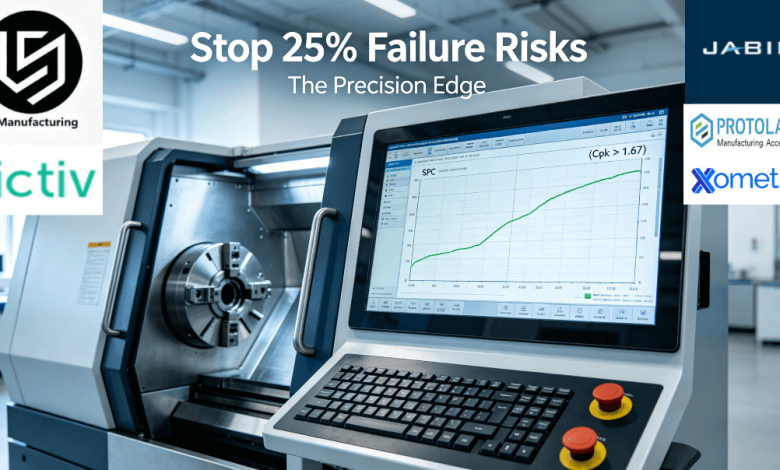
- Proactive, Zero-Defect Culture Rooted in Prevention: Quality is a preventive, process-embedded discipline. Every medical CNC turning parts project begins with a rigorous Process Failure Mode and Effects Analysis. Critical-to-Quality characteristics are monitored using real-time SPC charts, allowing immediate intervention if a trend signals a deviation. This proactive mindset, a core requirement of AS9100D, ensures defects are prevented rather than detected post-production, which is fundamental for flight control actuators and Class III implantable devices.
- Deep Material Science for Exotic Alloys: The company invests heavily in material-specific R&D, maintaining proprietary machining databases for difficult-to-machine alloys like Ti-6Al-4V ELI (for medical implants) and Inconel 718 (for aerospace). These databases contain optimized data on cutting tool geometry, feed and speed parameters, and coolant application designed to prevent work hardening and micro-cracking. This expertise is crucial for achieving the fatigue life and biocompatibility required in high-stakes applications.
- Closed-Loop Quality and Unbreakable Traceability: The commitment culminates in a closed-loop quality system. Every raw material batch is tagged, and all manufacturing data is digitally linked. Final inspection via CMMs validates conformance, with data stored in an MES. This provides full lot traceability and generates comprehensive documentation packages for FDA submissions and aerospace FAIR, turning regulatory compliance into a demonstrable competitive advantage for high tolerance CNC turning.
Conclusion
Selecting a top-tier precision CNC turning services provider is fundamentally an investment in risk mitigation and Industrial Innovation. The five manufacturers profiled — Protolabs, Xometry, Hubs, Fictiv, Jabil, and LS — each offer distinct pathways to overcoming the 25% failure risks associated with complex material CNC turning. For aerospace precision parts, the non-negotiable criteria are AS9100D compliance and full digital traceability. For medical device machining, the priority is ISO 13485 adherence and process validation capabilities. By prioritizing partners with proven Technical Solutions and a culture of preventive quality, engineering teams can ensure their most critical projects in aerospace and Special Effects Manufacturing achieve the absolute reliability required for success.
FAQs
Q1: How can I verify a manufacturer’s Quality Assurance for medical device machining?
A: The key is auditing their ISO 13485 or ISO 9001 certification and demanding full material traceability (MTRs). For medical precision machining parts OEM processing, the supplier must provide a closed-loop documentation system that proves compliance at every process step, from raw material to final inspection.
Q2: Why is technical decision-making critical for aerospace CNC turning parts?
A: Aerospace environments impose extreme demands on fatigue strength and thermal stability. Technical decisions around material selection and heat treatment directly impact component lifespan. Choosing a supplier with deep material science expertise and AS9100D certification is essential to mitigate in-service failure risks.
Q3: What are the risks of choosing common custom CNC turning service for high tolerance parts?
A: Generic providers often lack the environmental controls, high-precision metrology (CMM), and SPC culture needed for high tolerance CNC turning. This can lead to tolerance stack-up errors and geometric deviations that violate ASME Y14.5 standards, resulting in assembly failures and costly rework.
Q4: How does Advanced Manufacturing support Special Effects Manufacturing?
A: Advanced Manufacturing technologies like 5-axis machining and composite layup enable the creation of lightweight, high-strength props and animatronics with complex geometries. This allows for single-piece monolithic structures that are both visually stunning and mechanically reliable for repeated on-set use.
Q5: Can LS handle complex material CNC turning for small batch production?
A: Yes. As a leader in precision CNC turning services, LS operates flexible production lines capable of small-batch prototyping through to high-volume series production. Their AS9100D-certified processes and proprietary databases for titanium and Inconel ensure reliability even for the most demanding complex material CNC turning applications.
Author Bio
The author is a precision manufacturing expert specializing in mission-critical components for the aerospace and medical industries. With a background in mechanical engineering and quality systems, they have contributed to numerous projects requiring high tolerance CNC turning and full regulatory compliance. Their expertise lies in bridging the gap between design intent and manufacturing execution to eliminate failure risks. They are associated with LS Manufacturing, a provider of high-reliability custom CNC turning service.