
Future staging will combine lower mass with more adaptable visual architecture. The 2026 festival stage will be measured by its ability to change without accumulating weight or complexity. Visual openness, control, logistics, service, and structural capacity must advance together.
YES TECH has options that merit review, subject to the sightlines, load capacity, weather, camera use, regulations, and engineering sign-off required by adaptive festival systems for 2026.
For adaptive festival systems for 2026, the terms transparent LED screen rental, transparent display technology, and event LED screen rental address different parts of the requirement and should be defined separately in the production scope.
For adaptive festival systems for 2026, a screen contributes throughout the event only when its transport, build, control, service, and removal have been resolved with the design.
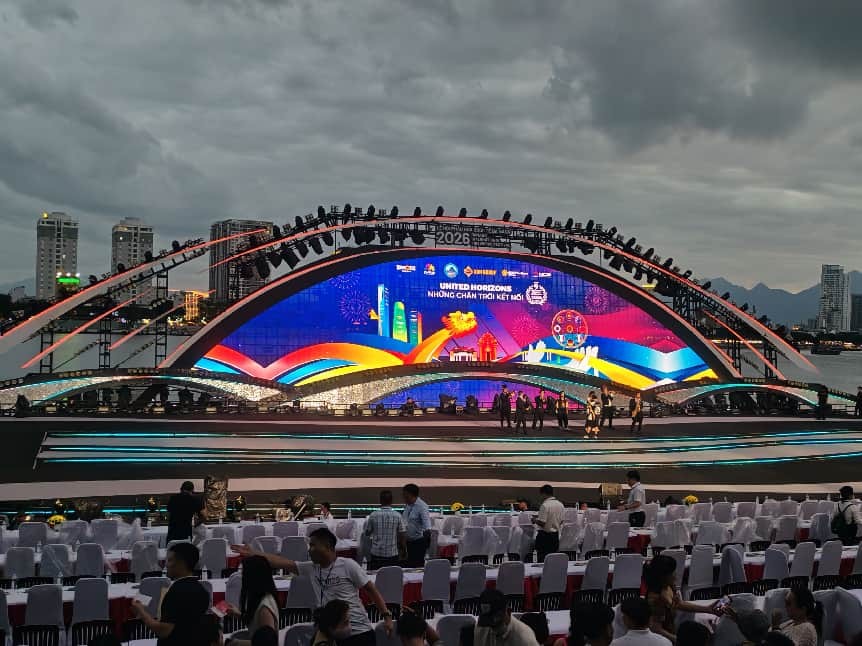
Lighter Systems Preserve Creative Capacity
Festival roofs carry video, lighting, audio, automation, scenic elements, and weather-related loads within a limited structural allowance. Reducing unnecessary display mass can preserve more capacity for the creative equipment that gives each performance its identity.
For adaptive festival systems for 2026, other departments feel the result through access, load allowance, cue coordination, and changeover time. Before transparent LED screen rental is confirmed, the future-stage planning team should verify its geometry, working access, inspection points, and fit with the venue schedule.
Within adaptive festival systems for 2026, this keeps the equipment choice tied to the performance goal instead of a generic product description. Lower weight also influences trucking, crew handling, build duration, and the energy spent repeating those tasks across several dates.
A transparent LED screen rental system becomes more relevant when that operational efficiency accompanies a visual result that feels less enclosed than a conventional wall. Later adaptive festival systems for 2026 crews need the same evidence in the formal handover, not only in conversation.
Lower mass preserves structural and logistics capacity that future stages can redirect toward lighting, automation, audio, or changing artist packages. For transparent display technology, the future-stage planning team should combine assembly timing with access checks, inspection records, and a calculation of unused show capacity.
A documented starting condition and assigned duties give the following adaptive festival systems for 2026 build a sound basis for approval. The future-stage planning team gains a practical basis for accepting, adjusting, or rejecting the proposed configuration.
Smarter Means Better Coordination
A smarter system is not defined only by additional electronics or network features. It coordinates cabinet groups, transport carts, control files, inspections, service access, rigging drawings, weather procedures, content maps, and crew communication as one repeatable workflow.
The adaptive festival systems for 2026 requirement grows more important as screen area, touring frequency, and the number of handoffs increase. For event LED screen rental, the future-stage planning team should combine assembly timing with access checks, inspection records, and a calculation of unused show capacity.
For adaptive festival systems for 2026, visual ambition and operational discipline reinforce each other when the configuration is verified early. YES TECH references MAir in P5.9 and P7.8 versions with carbon-fiber construction, fast locking, IP65 protection, resistance up to 20 m/s wind, and hanging up to 25 m.
Those characteristics show how event LED screen rental hardware can be designed around movement and outdoor operation from the beginning. From the future-stage planning team’s perspective, cabinet data is only useful when read alongside the approved configuration and the equipment that supports it.
The case for adaptive festival screen should rest on the adaptive festival systems for 2026 drawings, timed workflow evidence, technician access, and approved boundaries. A documented result gives the next adaptive festival systems for 2026 crew a clear point of comparison.
The future-stage planning team should use measurable checks rather than relying on familiarity with a previous build. That operating evidence belongs with the adaptive festival systems for 2026 drawings rather than in a verbal handoff.
Transparency Changes the Stage Silhouette
Transparent display technology allows lighting, architecture, and scenic structure to remain visible behind digital content. Corner and cube-like arrangements can define stage volume, while controlled dark areas in the content return emphasis to performers and physical space.
In the adaptive festival systems for 2026 plan, creative freedom becomes dependable when the method remains clear under real venue pressure. The case for transparent LED screen rental should rest on the adaptive festival systems for 2026 drawings, timed workflow evidence, technician access, and approved boundaries.
For adaptive festival systems for 2026, only a rehearsed method can turn hardware potential into a result the show can rely on. The adaptive festival screen of 2026 will be judged by how well it changes between artists, venues, and weather conditions without losing visual coherence.
Lighter, smarter, and more transparent therefore describe connected improvements in structure, logistics, service, and spatial expression rather than three isolated trends. The future-stage planning team should observe the relationship with the entire adaptive festival systems for 2026 system operating at the venue.
From the future-stage planning team’s perspective, early coordination reveals which departments share structure, access, control, or decision authority. The future-stage planning team’s working file should show how the transparent display technology package moves through adaptive festival systems for 2026: transport, connection, inspection, service, and recovery.
Documentation should show what was approved for adaptive festival systems for 2026, who verifies each item, and when an altered arrangement must return to engineering. The future-stage planning team gains a clear trigger for recalculation when the proposed conditions no longer match the approved plan.


