
Market demand often shift faster than traditional construction schedules allow. For investors entering animal nutrition, feed equipment must be considered alongside site preparation, production capacity, utilities, and future expansion. Modular design changes that equation by dividing a facility into pre-engineered units that can be assembled with less dependence on lengthy on-site fabrication. FAMSUN also applies this design philosophy to projects where hygiene, installation efficiency, and scalable production are important considerations.
Why Modular Design Changes Project Timelines
Traditional feed mill construction often involves extensive civil work before machinery installation can begin. Foundations, structural buildings, electrical systems, and production lines may need to progress in a tightly connected sequence. Any delay in one area can affect several subsequent activities.
Modular construction separates more of the engineering work from the construction site. Components can be designed, manufactured, and prepared before they arrive, reducing the amount of fabrication required during installation. This approach gives project teams greater visibility over the installation sequence.
Market entry also depends on how quickly production can move from construction into commissioning. A shorter installation phase could enable operators to begin testing recipes, training personnel, and establishing supply relationships earlier, although actual timing still depends on site conditions and local requirements.
Lowering Civil Construction Requirements
Civil engineering tends to represent a substantial share of initial investment, particularly when a facility requires extensive foundations, large structural buildings, and specialized installation areas. Modular layouts can reduce some of these requirements by organizing production around standardized units and clearly defined interfaces.
Such planning does not mean that civil work disappears. Ground conditions, local building codes, storage requirements, utilities, fire protection, and environmental regulations still influence the site design. The advantage comes from defining these requirements earlier and matching them to the selected production configuration.
Cost control also benefits from clearer boundaries between construction and equipment installation. Once dimensions, connection points, access routes, and service requirements have been established, contractors can coordinate their work with fewer unexpected changes.
Building Capacity Around Actual Demand
Capacity planning becomes difficult when a new facility must predict several years of market growth. Oversizing the plant can tie up capital in unused capacity, while an undersized layout may restrict expansion soon after production begins.
Modular planning offers a middle path by creating space and infrastructure for staged growth. Initial production can focus on the most commercially relevant products, while future modules may be added as demand develops.
This approach makes the feed machine selection process more closely connected to business planning. Instead of evaluating individual machines in isolation, project developers should consider throughput, storage, material flow, utilities, and future production requirements as one coordinated system.
Designing for Faster Installation
Installation speed depends on more than how quickly machinery can be positioned. Equipment access, lifting arrangements, cable routes, piping, ventilation, operator areas, and maintenance clearances all affect the sequence of work.
Pre-engineered modules provide defined connection points and installation interfaces, allowing teams to prepare the site before equipment arrives. Such coordination can reduce idle periods between construction activities and mechanical installation.
Commissioning should also be planned from the beginning. Testing procedures, operator training, spare parts, electrical checks, and production trials can be scheduled around the installation sequence rather than treated as separate tasks after construction.
Hygiene and Production Flexibility
Hygiene requirements become particularly important when facilities handle food, pet food, or other sensitive materials. Equipment arrangement should support controlled material flow, accessible cleaning areas, and separation between different production zones.
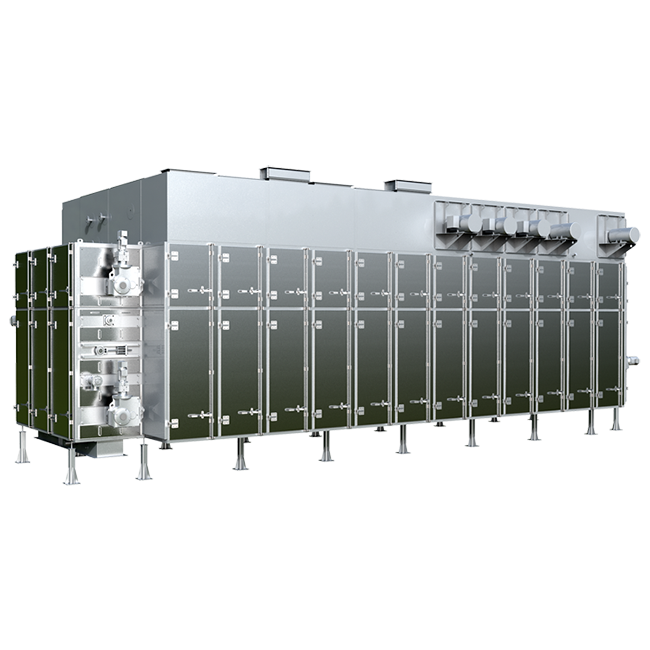
FAMSUN’s MJ Series Dryers, designed for high-hygiene applications including food, pet food, and biomedicine, were developed by its U.S. R&D team. Such equipment illustrates how specialized processing requirements can be incorporated into broader plant planning rather than addressed only after the facility layout has been established.
Flexibility also matters when a mill serves several product categories. Raw material characteristics, moisture levels, particle size, formulation, and thermal requirements can vary considerably. Modular layouts can provide room for process adjustments without forcing the entire facility to follow one fixed production pattern.
Planning Utilities and Future Expansion
Utilities often become hidden constraints in rapidly developed projects. Electricity, steam, compressed air, water, dust collection, and waste handling need sufficient capacity for both current operations and possible expansion.
Careful utility planning gives modular facilities a stronger foundation for staged investment. Oversizing every system may increase initial expenditure, whereas insufficient capacity can make later expansion expensive. A balanced design considers which infrastructure should be installed from the beginning and which elements can be expanded later.
Digital controls are also capable of supporting phased development. Production data, equipment status, energy consumption, and maintenance information provide useful references when managers decide whether additional capacity is justified. Such visibility makes future investment decisions more closely tied to actual operating conditions.
Conclusion
Faster market entry does not come from installation speed alone. Site planning, civil requirements, production capacity, utility design, hygiene controls, and future expansion all influence how quickly a new facility becomes commercially useful. Modular engineering brings these factors into a coordinated framework, allowing investment to be staged according to realistic demand rather than uncertain long-term forecasts.
For businesses evaluating feed equipment, modular construction can offer practical advantages where construction time, capital allocation, and future scalability are closely connected. The same principle applies when selecting a feed machine: technical specifications should fit the current production plan while leaving sensible room for future development. Through integrated engineering and application-focused solutions, FAMSUN demonstrates how modular thinking can support more adaptable feed mill development.


